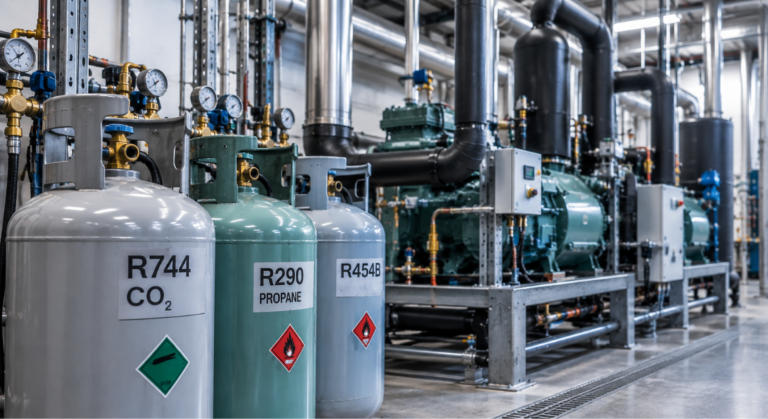
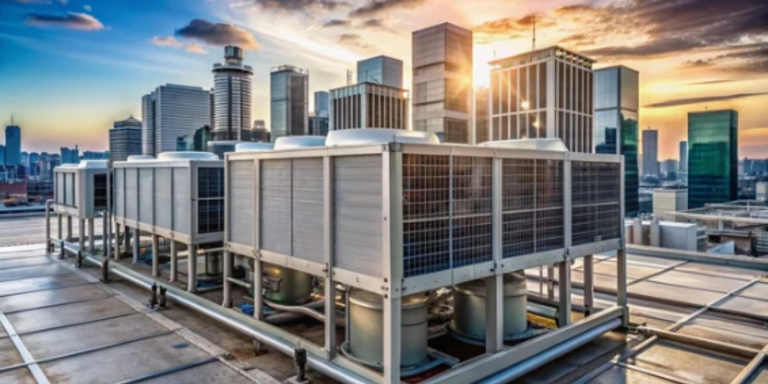
Our Refrigeration team designs and delivers industrial heat pump systems tailored to your site and process requirements. From initial assessment through to installation and commissioning, systems are configured for real-world operating conditions and seamless integration with existing plant and controls.
This approach protects performance, system stability, and long-term efficiency, supporting decarbonisation objectives without compromising operational reliability.
Frequently Asked Questions
Are air-source heat pumps suitable for industrial applications?
Air-source heat pumps can be applied in industrial environments where temperature requirements, load profiles, and operating conditions are properly assessed. Suitability depends on factors such as required flow temperatures, duty cycles, available space, and how the system integrates with existing plant and processes.
Can industrial heat pump systems provide both heating and cooling?
Yes. Industrial heat pump systems can be configured to deliver heating, cooling, or a combination of both, depending on site requirements. This allows facilities to electrify thermal demand while maintaining control across different operating modes and seasonal conditions.
Do air-source heat pumps replace gas-fired systems entirely?
Not in every case. In many industrial settings, heat pumps are introduced alongside existing gas-fired plant as part of a hybrid or phased approach. This can reduce reliance on natural gas while maintaining resilience where higher temperatures or standby capacity are required.
What factors influence real-world heat pump performance?
Real-world performance is influenced by site-specific factors including required flow temperatures, ambient air conditions, load variation, operating hours, and integration with existing plant and control systems. These must be considered during design to ensure stable and efficient operation.
How are industrial heat pump systems integrated and commissioned?
Industrial heat pump systems are integrated with existing plant and controls to suit actual operating conditions. Commissioning is carried out against real duty requirements to ensure reliable performance, effective control, and long-term efficiency from day one.