
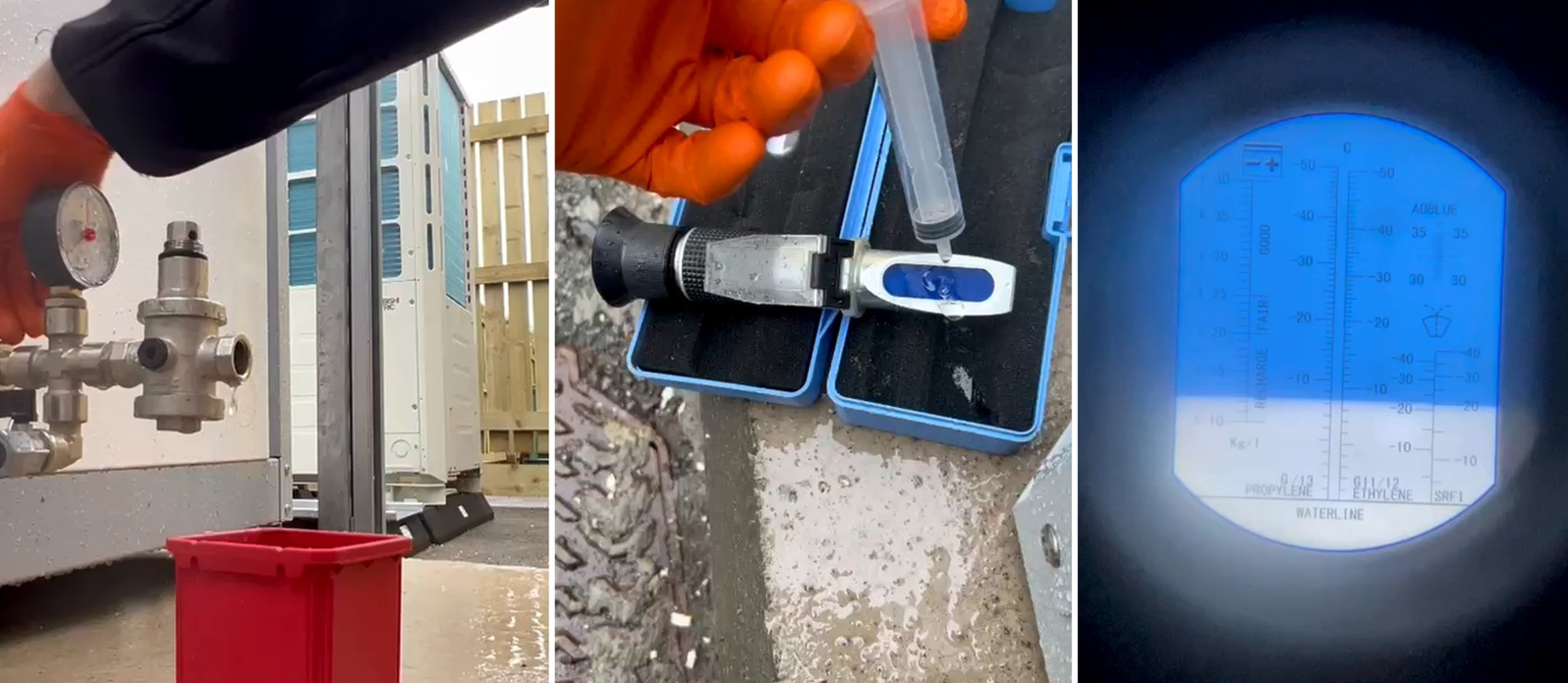
As we head into the colder months, it’s worth taking a closer look at how well your process chiller is protected against freezing temperatures. Chillers are often associated with keeping things cool, but cold weather can bring its own challenges, particularly for equipment installed outdoors.
One of the things worth checking before winter is the glycol concentration within the system. It’s a routine part of chiller maintenance, but one that can sometimes be overlooked, especially when everything appears to be running as normal.
Why does glycol concentration matter?
Glycol is mixed with water in many process cooling systems to help prevent the fluid from freezing when temperatures drop. If the concentration is too low, the system may not have enough protection against freezing temperatures. This can lead to serious damage, including burst evaporators, damaged pipework and potentially expensive repairs.
However, having too much glycol can also cause problems. As the concentration increases, the fluid generally becomes more viscous, meaning it’s thicker and harder to circulate. This can make pumps work harder and increase energy consumption, while also affecting how efficiently heat is transferred through the system.
Getting the concentration right is therefore about more than just preventing freezing. It’s about protecting the equipment while making sure the system continues to operate efficiently. The correct mixture will depend on the type of glycol being used, the chiller manufacturer’s recommendations and the conditions the equipment operates in.
What happens during a glycol percentage check?
Checking glycol concentration is a fairly straightforward process for a trained engineer. A sample of fluid is taken from the system and tested using suitable equipment, often a refractometer, to establish the glycol percentage and assess whether it provides the required level of freeze protection.
It’s also worth paying attention to the condition of the fluid itself. Glycol mixtures can deteriorate over time, and factors such as contamination or changes in fluid chemistry can affect how well the system performs. A concentration reading alone won’t tell you everything about the fluid’s condition, which is why additional checks may be needed.
Why is it worth checking before winter?
One of the difficulties with inadequate freeze protection is that you might not know there’s a problem until the weather turns particularly cold. A chiller could run without any obvious issues throughout summer and autumn, only for freezing temperatures to expose a weakness in the system.
Finding out there’s a problem during a cold spell is far from ideal, especially if the chiller supports an important production process. Checking the glycol concentration beforehand gives maintenance teams the chance to make any necessary adjustments before the colder weather arrives.
It’s a relatively simple check, but the potential consequences of getting it wrong can be significant.
What else should be checked?
Of course, glycol is only one part of preparing a chiller for winter. Frost protection controls, exposed pipework, insulation, pumps and fluid circulation are all worth reviewing as part of a wider maintenance programme.
It’s also important to consider what happens when the chiller isn’t running. Depending on the installation, additional measures may be needed to protect the system during shutdown periods or particularly low temperatures.
Every installation is different, so winter maintenance should always take account of the equipment, its operating conditions and the manufacturer’s recommendations.
Preparing for What’s Next
For businesses that rely on process cooling, the last thing anyone wants is an avoidable equipment failure disrupting production. Regular maintenance won’t eliminate every risk, but it can help identify issues that might otherwise go unnoticed until they cause a problem.
A glycol percentage check is just one example. It doesn’t take long for a trained engineer to carry out, but it can provide valuable reassurance that the system has the freeze protection it needs.
With winter approaching, it’s worth making sure these checks haven’t been missed.