
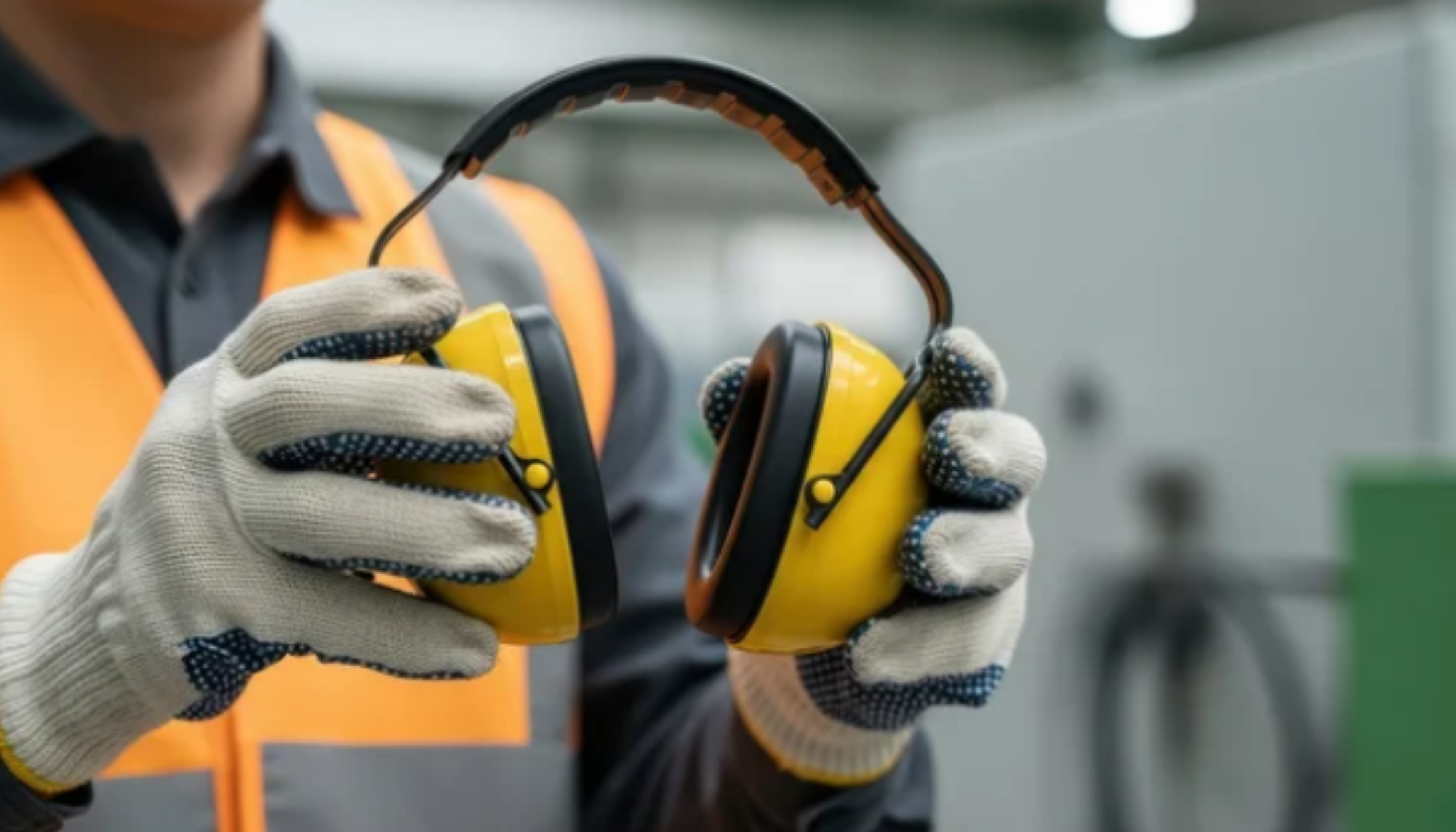
The Growing Challenge of Industrial Noise
When organisations think about ventilation, the conversation often centres around temperature control, indoor air quality and energy performance. These are all important considerations, but there is another factor that is becoming increasingly difficult to ignore.
Noise.
As industrial facilities expand and urban development continues to bring residential communities closer to commercial sites, the acoustic impact of building services is attracting greater attention. Ventilation systems that were once considered acceptable may now contribute to complaints, planning challenges and strained relationships with neighbouring communities.
In many cases, the issue is not that a ventilation system is failing to perform. It is that the way it delivers that performance no longer aligns with the environment around it.
Why Noise Matters More Than Ever
Manufacturing plants, warehouses and processing facilities often operate for extended hours, with many running around the clock to meet demand. Ventilation systems are therefore expected to operate consistently, regardless of the time of day.
While this supports production, continuous mechanical ventilation can also become a significant source of background noise. As residential developments continue to be built closer to industrial estates, businesses are finding themselves operating alongside people who expect quieter surroundings during evenings, nights and weekends.
Noise complaints can lead to more than inconvenience. They can trigger investigations, place additional pressure on environmental teams and, in some cases, influence future planning applications or site expansion proposals. Addressing these issues after installation is often far more difficult and expensive than considering them during the design stage.
The Hidden Cost of Over Specifying Mechanical Ventilation
For many years, mechanical extraction has been the default solution for industrial ventilation. It provides predictable airflow and reliable performance, but there can be unintended consequences when systems rely entirely on fans operating at high output.
Larger motors, higher air velocities and continuous operation often increase operational noise alongside energy consumption and maintenance requirements. While acoustic attenuation can reduce some of this impact, it does not always address the root cause.
This raises an important design question.
Should every ventilation requirement be met through mechanical operation alone, or is there an opportunity to use natural airflow whenever conditions allow?
A Smarter Balance Between Natural and Mechanical Ventilation
Hybrid ventilation takes a different approach by combining natural ventilation with mechanical assistance only when it is genuinely required. Rather than always relying on fans, the system responds to changing building conditions, weather and occupancy to maintain suitable indoor environments.
Many hybrid systems achieve this through wind assisted natural ventilation, using technologies such as vertical vane roof turbines with an open throat design that encourage natural airflow through the building. By harnessing prevailing wind conditions alongside the natural stack effect, these systems can provide effective ventilation without relying solely on continuously running mechanical equipment.
The hybrid design also lends itself to night purge ventilation, allowing cooler night-time air to flush accumulated heat from the building. This can help reduce internal temperatures before the next working day. During warmer daytime conditions, natural airflow can perform to meet air quality targets. Mechanical mode is then deployed during the evening to increase the ventilation rate, taking advantage of cooler overnight air to remove radiant energy emissions from the building fabric. This ensures the internal environment is held at minimum overnight temperatures for the start of the next day. This multi-mode approach can be effective in unoccupied facilities during the night without any concern of operational noise.
This means that during favourable conditions, natural airflow can perform much of the work without the constant operation of mechanical equipment. Mechanical assistance is then introduced only when additional airflow is needed to maintain indoor air quality or thermal comfort. This two-mode approach can reduce operational noise while continuing to deliver effective ventilation performance.
The result is not simply a quieter ventilation strategy. It is a more adaptable one.
Designing For Performance and Community
Industrial facilities do not exist in isolation. Every building forms part of a wider environment that includes neighbouring businesses, local communities and future developments.
As environmental expectations continue to evolve, successful building design increasingly means balancing operational performance with external impact. Noise should be considered alongside energy efficiency, indoor air quality and sustainability rather than treated as an afterthought.
Organisations that take this broader view are often better positioned to avoid future operational challenges while creating buildings that remain suitable as their surroundings change.
Looking Beyond Today’s Requirements
Ventilation systems are long term investments that may remain in operation for decades. During that time, the building itself, the surrounding area and environmental expectations are all likely to evolve.
Choosing a ventilation strategy is therefore about more than meeting today’s airflow calculations. It is about considering how that building will continue to operate efficiently, responsibly and harmoniously in the years ahead.
As industrial facilities strive to become better neighbours while maintaining productivity and efficiency, quieter and more adaptable ventilation strategies are becoming an increasingly important part of future focused building design.
The best ventilation strategies rarely rely on a single technology. Every building has different challenges, and finding the right balance between natural ventilation, mechanical systems and evaporative cooling can help create quieter, more efficient environments. Learn more about the role hybrid and natural ventilation can play.