When temperatures rise, many industrial facilities focus on finding immediate ways to keep employees comfortable and operations running smoothly. Temporary cooling solutions are often introduced, doors are left open for ventilation and existing systems are pushed harder to cope with the demands of warmer weather.
While these measures may provide short-term relief, they can also highlight something much bigger. Summer has a way of exposing how well, or how poorly, a building is performing.
Rather than viewing hot weather as a seasonal inconvenience, businesses should see it as an opportunity to better understand how their facility responds under pressure and where improvements could deliver long-term operational benefits.
Hot Weather Reveals What Cooler Months Can Hide
Many industrial buildings perform differently in summer than they do throughout the rest of the year.
Heat builds up faster; air movement becomes increasingly important and maintaining comfortable working conditions becomes more challenging. Processes that generate heat place additional demands on the building, while warmer external temperatures make it harder to control the internal environment.
These conditions can expose issues that may have existed for years but only become noticeable when the building is operating at its limits.
Whether it is uneven temperatures, poor airflow or rising energy consumption, summer often highlights opportunities for improvement that remain hidden during cooler periods.
The Hidden Cost of Poor Air Management
When a building struggles to manage heat effectively, the impact can extend far beyond uncomfortable working conditions.
Poor air management can contribute to:
- Higher energy consumption
- Inconsistent temperatures across the facility
- Reduced employee comfort and productivity
- Increased strain on cooling and ventilation systems
- Heat build-up around production equipment
- Greater operational inefficiencies
These challenges rarely occur in isolation. They often influence one another, creating a cycle where businesses spend more on energy while achieving less effective environmental control.
Looking Beyond Temperature
It is easy to assume that temperature alone determines whether a building is performing well during the summer months.
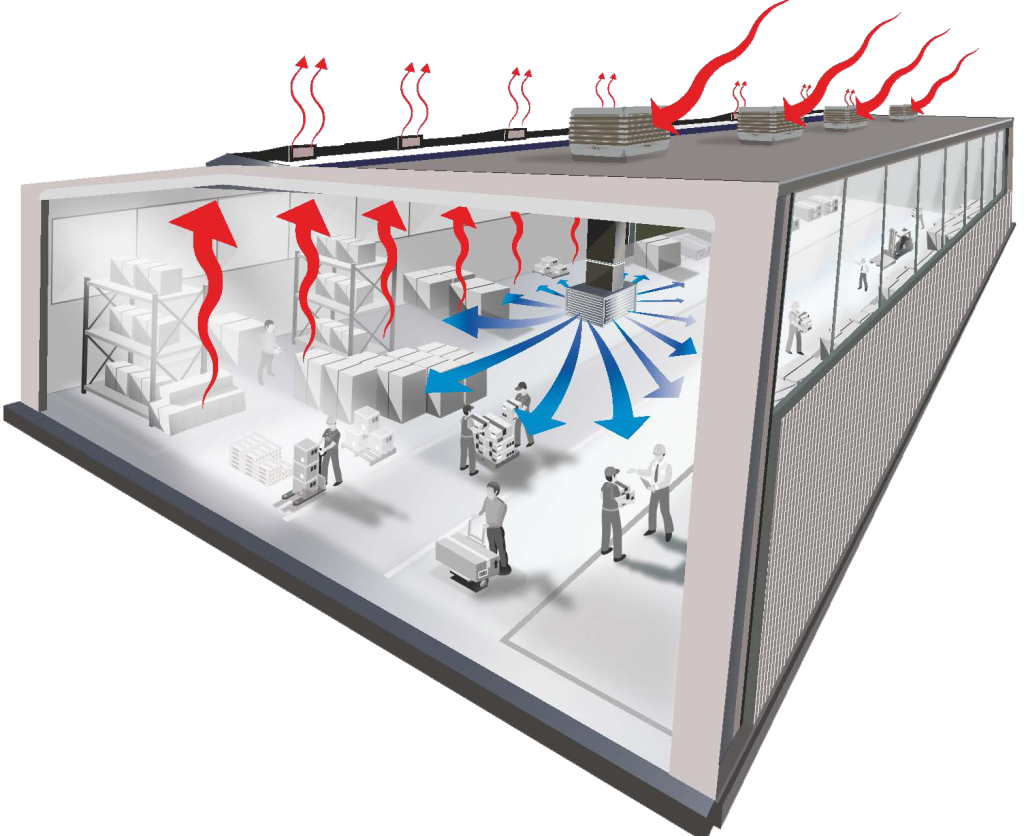
In reality, the movement of air throughout a facility plays an equally important role. Warm air naturally rises, creating significant temperature differences between floor level and roof height. Without effective air circulation, heat can become trapped, leaving some areas of a building considerably warmer than others.
At the same time, uncontrolled airflow through frequently opened doors can allow conditioned air to escape while introducing warm outside air, dust, humidity and airborne contaminants.
By looking beyond the thermostat and considering how air moves throughout a facility, businesses often uncover opportunities to improve both comfort and operational performance.
Building Performance Is About More Than Comfort
Creating a comfortable working environment is important, but effective air management also supports wider business objectives.
A well-performing building can help improve energy efficiency, support consistent production environments, reduce unnecessary strain on mechanical systems and contribute to a healthier workplace.
As energy costs continue to rise and sustainability becomes an increasingly important consideration, optimising how a building manages heat and airflow is no longer simply a facilities issue. It is becoming an important part of operational resilience and long-term business performance.
A Valuable Opportunity to Learn
Every period of hot weather provides valuable insight into how an industrial building performs under demanding conditions.
Rather than simply reacting to rising temperatures each summer, businesses can use these periods to identify recurring challenges, assess how existing systems are performing and consider where improvements could deliver lasting value.
Questions such as where heat accumulates, whether airflow is reaching the areas that need it most, how efficiently cooling systems are operating and whether environmental conditions remain consistent across the facility can all help build a clearer picture of overall building performance.
Looking Ahead
As summers become warmer and periods of extreme heat become more frequent, the ability of industrial buildings to maintain efficient, comfortable and productive environments will become increasingly important.
The organisations that benefit most are unlikely to be those that simply respond when temperatures rise. They will be the ones that use these conditions to better understand their buildings, identify opportunities for improvement and make informed decisions that support long-term operational performance.
Sometimes the best time to evaluate a building is when it is being challenged the most. Summer provides exactly that opportunity.