In industrial refrigeration and process cooling, maintaining reliable equipment is essential to keeping operations running efficiently. While regular servicing plays an important role, understanding the condition of equipment between maintenance intervals can be just as valuable. Heat exchangers are a good example of this, as changes in their condition aren’t always immediately obvious during day-to-day operation.
A heat exchanger may appear to be operating normally, but that doesn’t necessarily mean there are no developing issues worth investigating. Changes in temperature distribution, signs of external corrosion or deterioration in accessible components can all provide useful information about its condition. Recognising these signs early can help businesses make more informed maintenance decisions and reduce the risk of unexpected disruption.
Are Your Heat Exchangers Showing Signs You Can’t See?
Plate heat exchangers play an important role in transferring heat between fluids across a wide range of industrial applications. Their performance is often critical to maintaining process temperatures, supporting production and ensuring cooling systems operate as intended.
However, not every potential issue presents itself as an immediate breakdown or noticeable reduction in performance. Some changes develop gradually, making them more difficult to identify through routine operational monitoring alone.
Uneven surface temperatures, for example, may indicate an area that requires closer attention, while visible corrosion on tie bars or other accessible components can highlight maintenance requirements that might otherwise be overlooked. Although these observations don’t automatically mean that a heat exchanger is failing, they can provide an early indication that further monitoring or investigation would be worthwhile.
The challenge for maintenance teams is understanding which findings require action and which can simply be monitored over time.
What Can Thermal Imaging Tell Us About Equipment Condition?
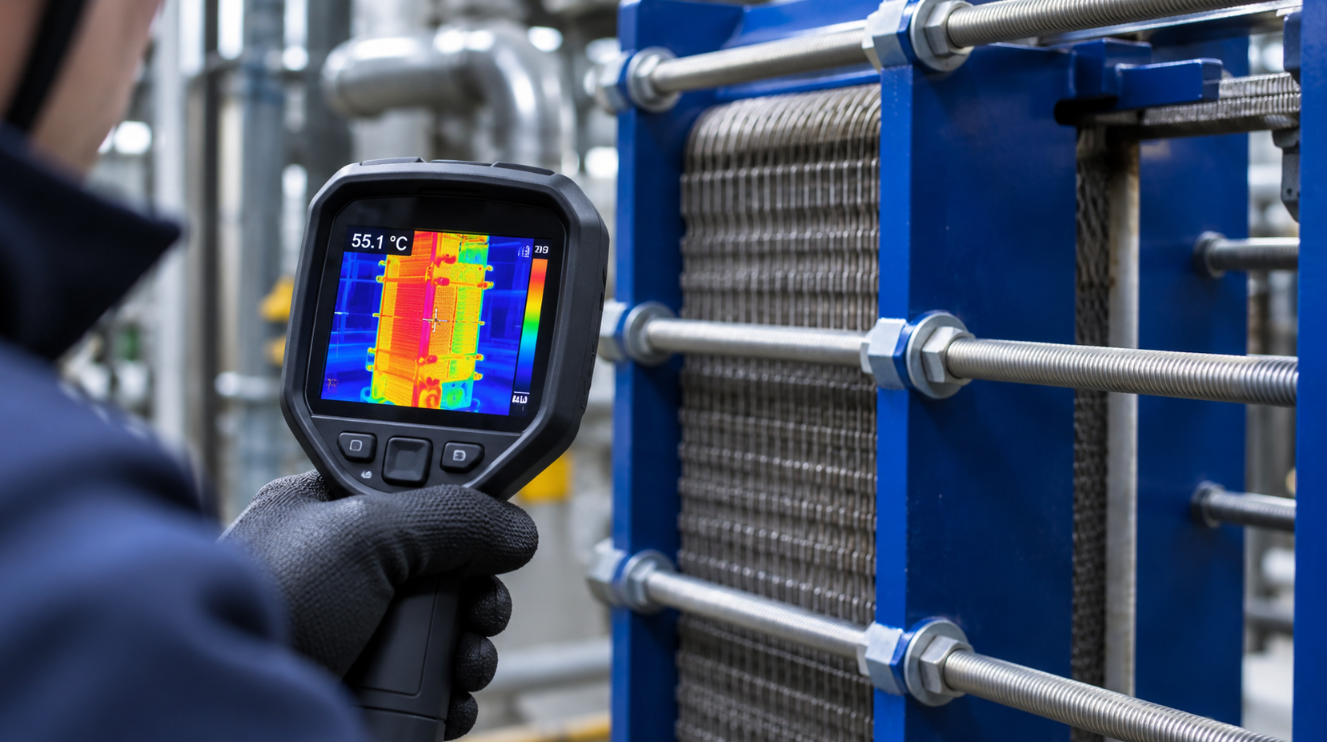
Thermographic imaging is becoming an increasingly useful tool in industrial equipment condition assessments, allowing engineers to examine surface-temperature patterns without needing to dismantle the equipment.
Using infrared technology, thermal images can highlight variations in temperature across a heat exchanger’s surface, including localised cold spots and areas where heat distribution appears uneven. These observations can help identify areas that may benefit from closer investigation, particularly when considered alongside operating conditions and other inspection findings.
One of the advantages of thermography is the ability to gather useful information about equipment while it remains assembled. For facilities where access to critical equipment is limited or maintenance windows need to be carefully planned, this can provide an additional level of insight without immediately requiring intrusive inspection work.
However, thermal imaging is not a complete assessment of heat exchanger performance on its own. Surface-temperature patterns can be influenced by operating conditions, and an unusual reading doesn’t necessarily confirm an internal fault. Thermography cannot independently establish internal fouling, pressure integrity, thermal duty or remaining equipment life, which is why findings should always be considered as part of a wider condition assessment.
Does Every Warning Sign Mean Something Is Wrong?
One of the most important aspects of equipment condition monitoring is recognising that not every unusual observation requires immediate intervention.
For example, a thermographic inspection of a plate heat exchanger may identify a slight localised cold spot within the plate pack. While this could justify further investigation, it doesn’t necessarily mean that the equipment needs to be taken out of service or dismantled straight away.
In one inspection example, a heat exchanger displayed a small cold spot towards the upper-middle section of its plate pack. Rather than recommending immediate servicing, the assessment concluded that performance should continue to be monitored, with no immediate maintenance intervention required.
In another example, a heat exchanger was found to be operating effectively, but signs of rust were identified on its external tie bars. The recommended actions were to clean and re-grease the affected components and fit protective covers during the next service.
These examples highlight an important distinction between identifying a potential issue and understanding what action is actually necessary. Effective condition monitoring isn’t simply about finding faults; it’s about gathering enough information to make sensible, proportionate maintenance decisions.
Are We Moving Towards More Condition-Based Maintenance?
Traditionally, industrial maintenance has often been organised around fixed servicing intervals, with equipment inspected or maintained according to a predetermined schedule. While planned maintenance remains essential, relying entirely on time-based servicing may not always provide a complete picture of equipment condition.
Condition-based maintenance takes a slightly different approach by using information about the actual state of equipment to help determine when further attention may be needed.
For heat exchangers, this could involve reviewing thermal imagery alongside visual inspection findings, plate-pack measurements and operating information. Together, these observations can help maintenance teams identify components that require attention, recognise changes worth monitoring and plan further investigation where necessary.
This doesn’t mean replacing scheduled servicing with thermal inspections. Instead, it means using the information available to make maintenance planning more informed and targeted.
For businesses operating critical refrigeration or process cooling systems, having a clearer understanding of equipment condition can also help with planning maintenance around production requirements. Where findings indicate that work can safely be scheduled for a future maintenance window, unnecessary disruption may be avoided.
Why Is Understanding Equipment Condition So Important?
Unexpected equipment problems can have consequences that extend well beyond the cost of a repair. In environments where refrigeration and cooling are essential to production, an unplanned interruption can affect process stability, operational efficiency and the ability to meet production schedules.
Understanding equipment condition helps businesses take a more informed approach to managing these risks.
Rather than waiting for an obvious performance issue to develop, maintenance teams can use inspection findings to identify areas requiring attention and make decisions based on the condition of individual assets.
Keeping accurate records is also valuable. Documenting equipment details, thermal observations, plate-pack measurements and visible condition provides a reference for future inspections. When assessments are carried out under comparable operating conditions, this information can help engineers recognise changes over time and determine whether further action is required.
The value lies not just in identifying potential problems, but in building a clearer picture of how equipment is operating and where maintenance resources are best directed.
Why Equipment Condition Matters
As industrial businesses continue to focus on reliability, efficiency and reducing avoidable downtime, understanding equipment condition is becoming an increasingly important part of maintenance planning.
Thermographic imaging provides one way of gaining additional insight into heat exchangers, but its real value comes from how that information is interpreted alongside other inspection findings and operating data.
Not every unusual temperature pattern indicates a fault, and not every maintenance requirement calls for immediate action. By recognising the difference, businesses can make more informed decisions about when to monitor, investigate or intervene.
Ultimately, effective maintenance is about more than responding when something goes wrong. It’s about understanding the condition of critical equipment, recognising changes early and having the information needed to plan the right action at the right time.