Energy efficiency has become a central focus for businesses across every sector. Rising operational costs, growing sustainability targets, and increasing pressure to improve workplace environments are all forcing organisations to look more closely at how their buildings actually perform day to day.
Yet one of the most common causes of wasted energy in industrial and commercial spaces often goes unnoticed: thermal stratification.
In large buildings, warm air naturally rises and collects at roof level, while cooler air remains at ground level where people are working. The result is a significant temperature imbalance throughout the space, with heating systems frequently overcompensating to maintain comfortable conditions below.
For many facilities, this means energy is effectively being paid for twice, once to heat the building, and again to overcome the inefficiencies caused by uneven air distribution.
As businesses place greater emphasis on operational efficiency and environmental performance, de-stratification fans are increasingly being recognised as an important part of modern building management strategies.
The Hidden Cost of Stratified Air
Thermal stratification is particularly common in warehouses, manufacturing facilities, logistics centres, sports halls, and other large-volume spaces with high ceilings.
The challenge is not always obvious because heating systems may appear to be functioning correctly. Temperatures at thermostat level may meet the required set-point, while excessive heat continues to build unused in the roof space above.
Over time, this creates several operational challenges:
- Increased heating demand
- Higher energy consumption
- Inconsistent workplace temperatures
- Reduced occupant comfort
- Greater strain on HVAC infrastructure
In response, many facilities are beginning to look beyond heating generation alone and focus more closely on airflow management within the building itself.
This is where de-stratification fans are becoming increasingly relevant, not simply as ventilation equipment, but as part of a broader approach to improving building performance.
Energy Efficiency Is No Longer Just About Heating Systems
Historically, improving heating efficiency often focused solely on upgrading boilers or installing more advanced HVAC equipment. While these systems remain important, there is growing recognition that air distribution plays an equally significant role in overall building performance.
Even the most efficient heating system can struggle in a poorly balanced environment.
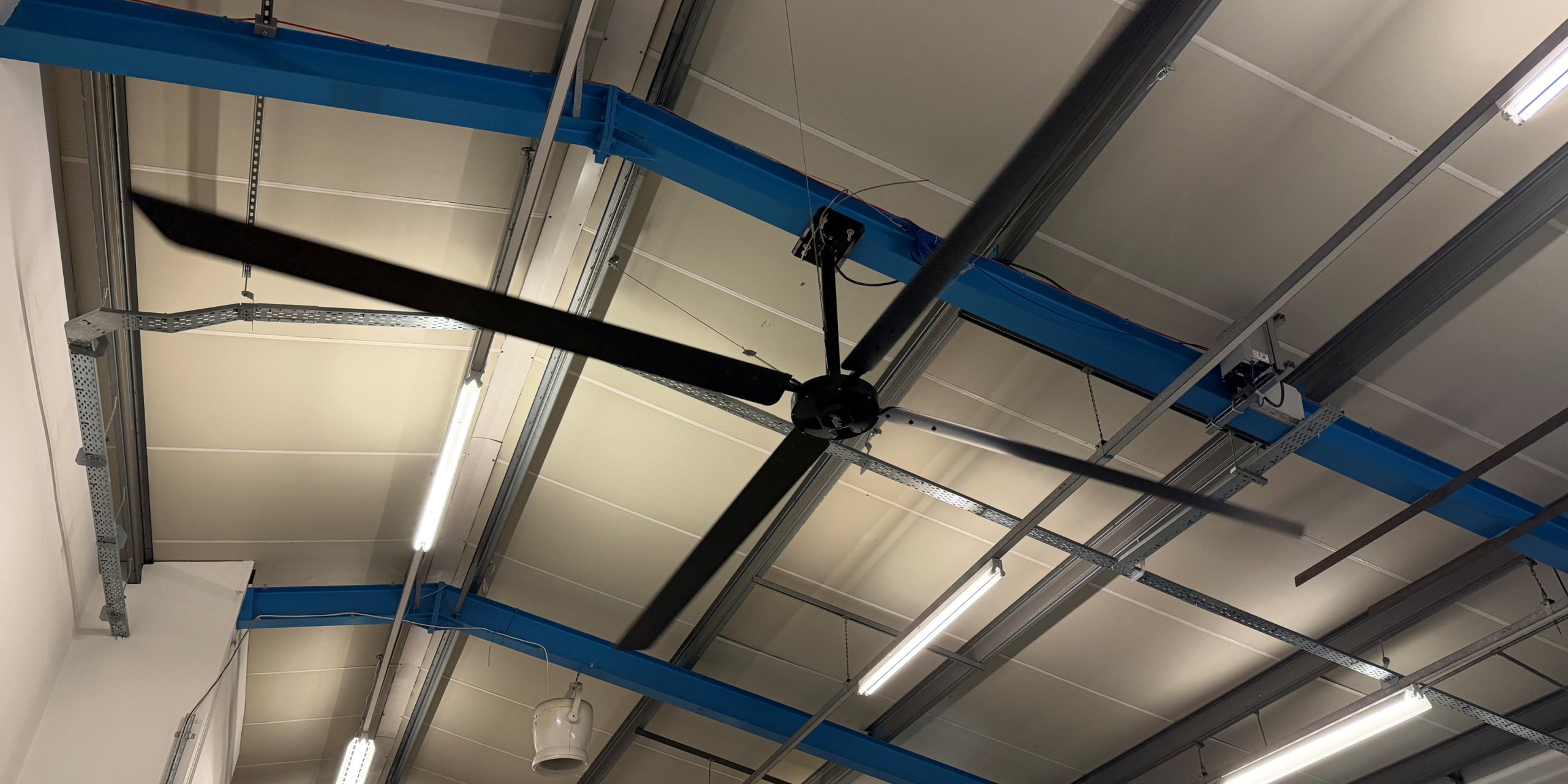
De-stratification fans help address this imbalance by continuously recirculating warm air that would otherwise remain trapped at ceiling level. By pushing that heat back into the occupied space, buildings can maintain more stable temperatures with reduced heating demand.
The principle itself is relatively simple, but its impact can be significant, particularly in large industrial environments where heating inefficiencies are magnified by building volume.
This shift reflects a broader trend in facilities management, moving from isolated equipment upgrades towards whole-building efficiency strategies.
Smarter Buildings Require Smarter Air Management
As industrial buildings become more advanced, the way air moves within a space is receiving greater attention.
Modern building performance is no longer judged solely by installed equipment capacity, but by how effectively the entire environment operates as a system. Temperature consistency, airflow management, and energy optimisation are now closely connected.
De-stratification fans are increasingly being integrated into these wider environmental control strategies because they support more balanced internal conditions without requiring major infrastructure changes.
For facilities managers, this creates opportunities to improve efficiency using existing heating systems more effectively, rather than relying solely on additional energy input.
The Workplace Environment Is Becoming a Greater Priority
The conversation around industrial and commercial buildings has also evolved beyond pure operational output. Increasingly, businesses are recognising the link between environmental conditions and workforce wellbeing.
Large temperature fluctuations across a workspace can impact comfort, concentration, and productivity, particularly in facilities where employees spend long periods operating in fixed areas.
By helping to maintain more consistent temperatures throughout a building, de-stratification fans can contribute to creating more comfortable working environments, especially during colder months when temperature differences between floor and ceiling levels are most noticeable.
Creating a more stable internal environment is no longer viewed simply as a facilities issue. It is becoming part of wider conversations around employee experience, retention, and workplace standards.
Sustainability Targets Are Driving Smarter Building Strategies
Many organisations are now under pressure to reduce emissions and demonstrate measurable progress towards sustainability goals.
In this context, reducing wasted energy inside existing buildings can often deliver faster and more cost-effective gains than large-scale infrastructure replacement projects.
Technologies such as de-stratification fans are becoming increasingly relevant because they improve the efficiency of existing heating and cooling infrastructure without requiring complete system overhauls.
For operations teams and facilities managers, that represents a practical way to reduce energy waste while supporting broader environmental objectives.
In many ways, de-stratification fans represent a wider shift in how industrial buildings are being managed, with greater focus on intelligent airflow, operational efficiency, and making better use of the energy already being consumed.