Industries are under constant pressure to cut carbon, control capital expenditure, and improve energy efficiency. Yet many still default to replacing air compressors long before their true asset value has run out.
This is not simply a maintenance habit. It is an outdated mindset built on linear consumption. Buy, use, replace. In a world defined by energy volatility, carbon accountability, and supply chain uncertainty, that mindset is increasingly difficult to justify.
The truth is that in many cases, replacement is not a technical necessity, it is a strategic failure to fully understand asset value.
Moving Beyond the Replace Mindset
When an air compressor approaches a certain age or performance threshold, replacement is often assumed to be the responsible option. It feels safer, but this reflex can mask significant hidden costs.
New equipment requires capital allocation, procurement time, installation risk, and operational adjustment. These decisions are rarely examined against a properly modelled refurbishment scenario.
If the core structure of the compressor remains fundamentally sound, then replacing it outright may represent premature financial irresponsibility rather than a useful investment.
The question organisations should be asking is not “Is it old?” but “Has its value truly been exhausted?”
Refurbishment as a Circular Economy Strategy
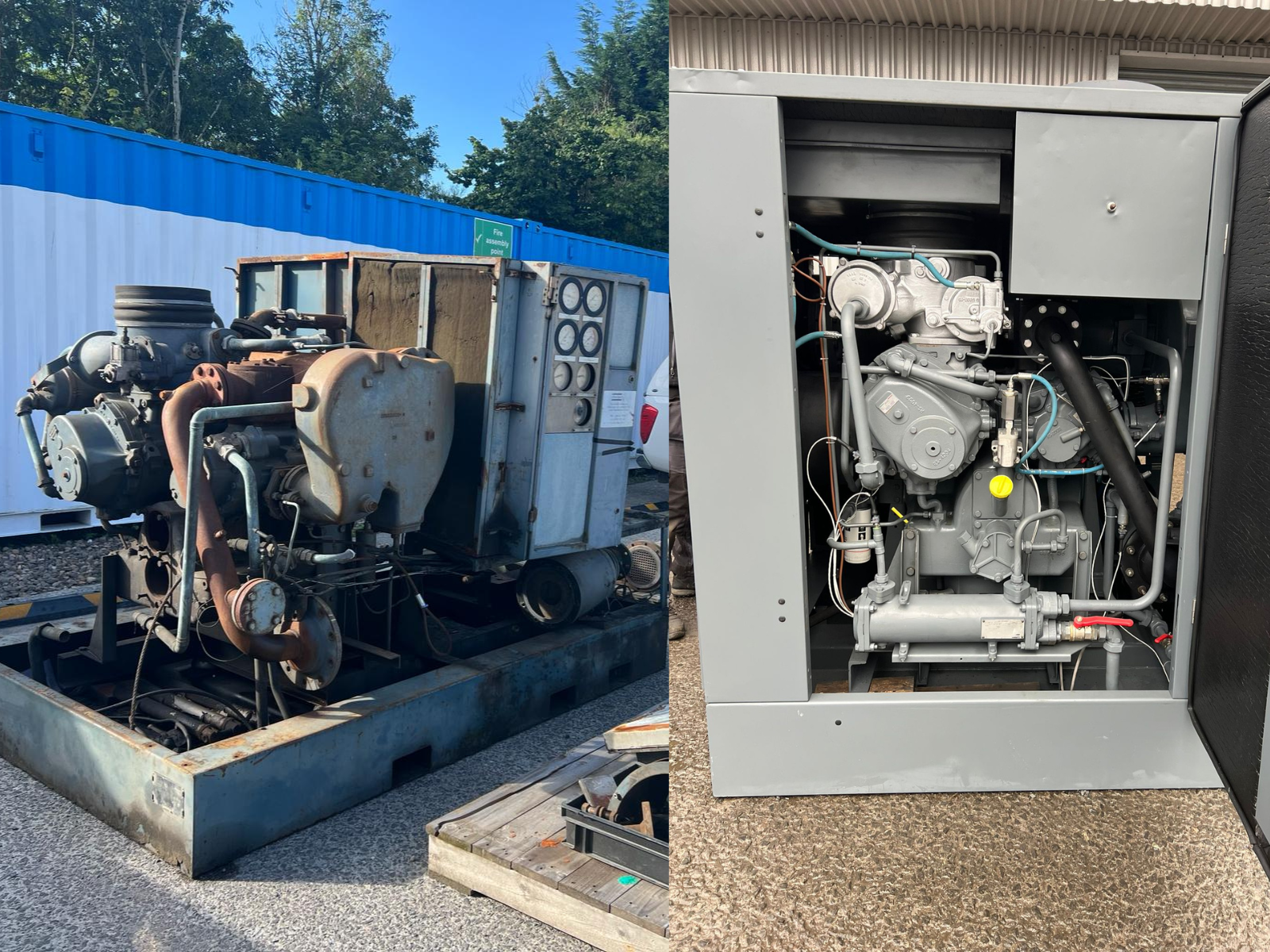
Circular economy principles focus on keeping materials and products in use at their highest value for as long as possible. Refurbishing air compressors fits squarely within this philosophy.
By retaining and restoring core components, organisations reduce demand for new raw materials, limit manufacturing emissions, and avoid unnecessary waste. The environmental benefit is not theoretical. It is measurable in embodied carbon avoided and material consumption reduced.
For businesses with formal sustainability targets, refurbishment provides a practical stepping stool for improvement. It allows environmental performance to improve without compromising operational capability.
Circular economy thinking is not only about environmental responsibility. It is about extracting maximum commercial value from existing assets.
The Hidden Financial Logic
The financial case for refurbishment extends far beyond the initial cost comparison between new and restored equipment.
New air compressors require capital allocation, procurement lead time, installation planning, and integration risk. Refurbishment often reduces downtime, accelerates return to service, and avoids extensive infrastructure modifications.
There is also a broader financial consideration. When organisations repeatedly replace rather than renew, they create higher lifecycle costs into their operations. Extending equipment life by even several years can materially shift total cost of ownership calculations.
In capital intensive industries, disciplined asset life extension can release funds for innovation and growth initiatives rather than routine replacement.
Energy Performance Is Not Reserved for New Equipment
One of the most common misconceptions is that efficiency gains are only possible through new equipment purchases.
In practice, refurbishment presents a powerful opportunity to reassess system design, recalibrate performance, and integrate modern controls. Many older systems operate inefficiently not because the compressor core is failing, but because controls, sequencing, or demand management strategies have not evolved.
A well-executed refurbishment programme can include upgraded drives, improved monitoring, leak reduction strategies, and optimised pressure settings. The result is often a meaningful reduction in energy consumption without the environmental and financial cost of manufacturing a new unit.
Energy efficiency is not simply about the machine. It is about how intelligently the system is managed.
Supply Chain Resilience and Risk Reduction
Lead times for industrial equipment are no longer predictable. Global material constraints and manufacturing roadblocks have made rapid replacement less certain.
Refurbishment offers a strategic alternative. It reduces dependency on external supply cycles and shortens the path back to reliable operation.
In a risk aware industrial environment, resilience is no longer optional. Extending the life of existing assets can be a proactive resilience strategy rather than a reactive compromise.
When Refurbishment Makes Strategic Sense
Refurbishment is not appropriate in every scenario. It requires technical assessment, performance analysis, and an understanding of future production demands.
However, in many cases the question should shift from “When do we replace?” to “What is the remaining strategic value of this asset?”
Organisations that build refurbishment into their asset management strategy often find they gain more than extended equipment life. They gain improved visibility of system performance, better alignment with sustainability objectives, and a more disciplined capital allocation framework.
A Shift in Industrial Mindset
Refurbishing air compressors is not about doing less. It is about doing more with what already exists.
As sustainability moves from corporate messaging to operational reality, refurbishment deserves to be viewed as a strategic lever rather than a secondary option.
Industrial businesses that adopt this mindset are not simply maintaining equipment. They are strategically changing how value is created, preserved, and extended across the lifecycle of their assets.