
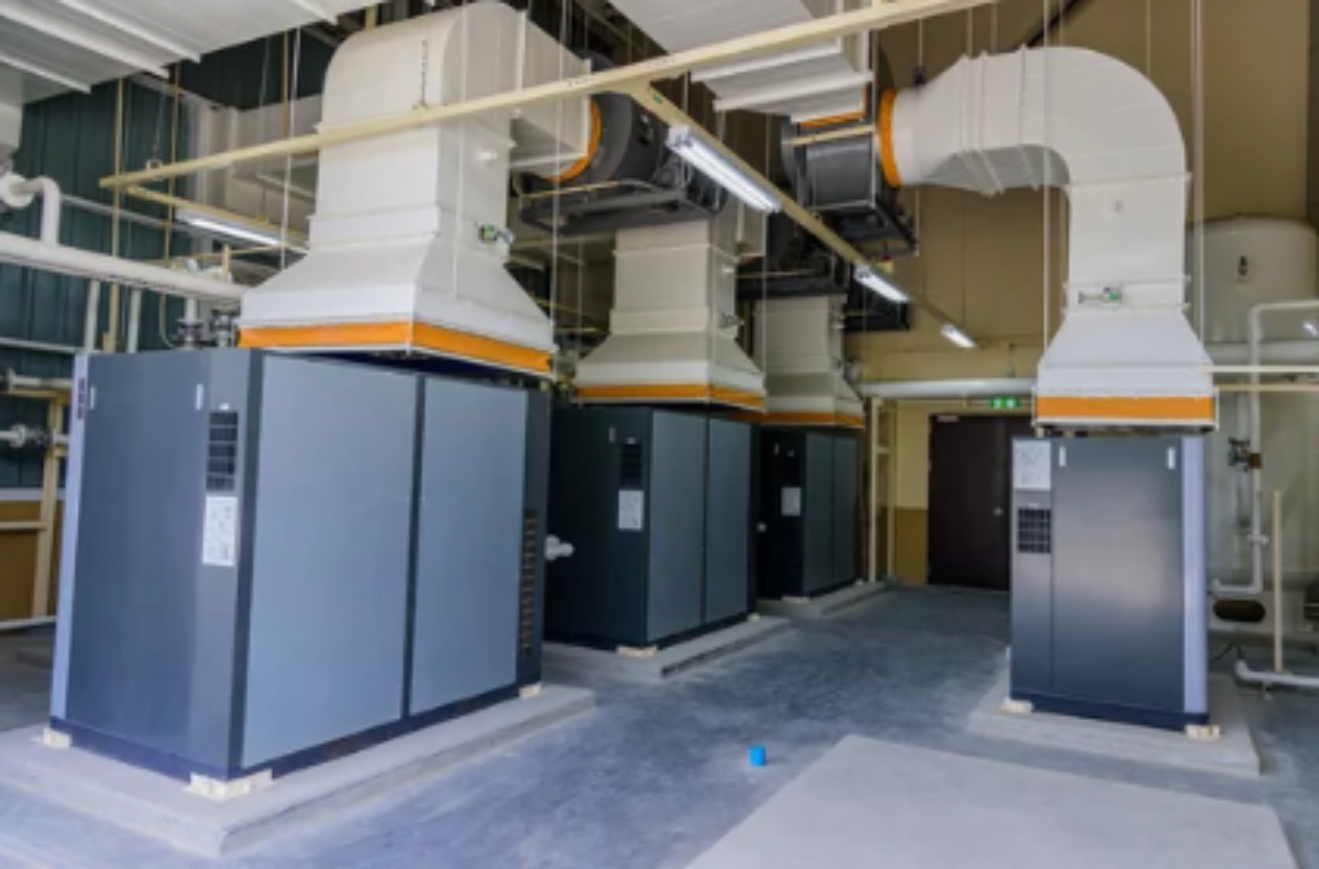
Heating industrial workspaces can be both energy intense and costly. Many facilities operate air compressors for long hours each day, yet a significant amount of heat generated during compression is wasted, often because heating and compressed air are treated as separate challenges. Heat recovery from air compressors provides a practical way to reuse this energy, helping businesses reduce costs while improving environmental performance.
By capturing and reusing waste heat, organisations can reduce operational costs and the usage of traditional heating systems, turning an unavoidable by-product into a measurable efficiency gain.
Heat Recovery from Air Compressors Explained
Air compressors convert energy into compressed air, but much of this energy is released as heat during the compression process. According to BCAS, up to 94% of the input energy generated by air compressors becomes thermal energy, which is typically vented away and lost in the atmosphere, rather than recovered as a usable energy source.
Heat recovery systems capture this excess heat and repurpose it for useful applications such as heating industrial workspaces, warehouses, or supporting process heating requirements. This allows compressed air systems to provide both operational function and usable heat, fundamentally changing their role within a site’s energy strategy.
While heat recovery is possible for both air-cooled and water-cooled air compressor systems, the required parts and installation processes are often different. Understanding the cooling mechanism is critical, as it directly influences feasibility, integration complexity, and overall performance.
Reducing Energy Waste in Industrial Processes
Energy misappropriation is a common challenge in industrial environments, particularly when heating large and open spaces. Much of this waste persists because heat is often treated as a separate issue rather than part of a wider energy system. Heat recovery from air compressors reduces this waste by making use of energy that has already been consumed.
Recovered heat can offset the demand placed on conventional heating systems, reducing the need for gas, oil, or electric heaters. This improves overall site energy efficiency and helps facilities maximise the value of existing equipment. This is especially useful for facilities where doors may be constantly opening and closing, causing expensive traditional heating to disappear quickly.
Lowering Heating Costs Through Energy Reuse
Heating costs represent a significant portion of operating expenses for many industrial sites. Yet in facilities already operating compressed air systems, a large proportion of that cost can be offset by reusing waste heat that would otherwise be lost.
Because compressors often run consistently throughout the working day, heat recovery can provide a predictable and ongoing heat source. When factored into lifecycle costs, this improves long-term savings and strengthens the overall return on investment from compressed air equipment.
Supporting Sustainability and Carbon Reduction
Heat recovery from air compressors supports sustainability initiatives by reducing the need for additional energy generation. Rather than creating new heat, facilities can lower the carbon emissions associated with space heating by making better use of energy that has already been consumed.
This approach aligns with wider energy efficiency strategies, net zero objectives, and environmental compliance requirements. Importantly, it provides a measurable way for organisations to demonstrate progress, moving sustainability from aspiration to accountable action.
Improving Comfort in Industrial Workspaces
Maintaining comfortable temperatures in industrial environments is essential for employee wellbeing and productivity. In many facilities, achieving this consistently is difficult using traditional heating alone. Heat recovery systems can help deliver stable background heating, particularly during colder months, improving comfort without relying on intermittent or high-intensity heat sources. This helps maintain appropriate indoor temperatures and supports a more comfortable working environment.
Integrating Heat Recovery with Existing Compressor Systems
Heat recovery systems can often be integrated into existing compressed air installations. Options include ducting warm air directly into workspaces or using heat exchangers to distribute recovered heat through air or water systems.
Because these systems operate alongside existing equipment and typically require little additional maintenance, heat recovery is often a practical upgrade rather than a major infrastructure change for industrial facilities.
A Cost Effective and Sustainable Heating Solution
Heat recovery from air compressors offers a clear opportunity to improve energy efficiency, reduce operating costs, and support environmental goals. By turning waste heat into a valuable resource, industrial businesses can make better use of existing systems while reducing the usage of traditional heating methods.
For organisations looking to balance cost savings with sustainability, heat recovery provides a practical and forward-thinking approach to alternative heating methods.
To find out how heat recovery could work for your facility, contact the team at sales@cpa-group.com for advice tailored to your operational requirements.